Desalination Around the World: Which Countries Distill Seawater — and Why Burning Trash Could Power the Next Generation
Roughly one in every twenty-five litres of municipal drinking water on Earth no longer starts in a river, lake, or aquifer. It starts in the ocean — pulled in through an intake pipe, pushed through a desalination train, and turned into freshwater by either heat or pressure. Today there are 15,906 operational desalination plants worldwide producing about 95 million cubic metres of freshwater every day, and the industry is growing roughly 7% a year (Jones et al., 2019; Eke et al., 2020). At Puretap, we have spent forty years thinking about how to remove dissolved minerals from water, so the global story of seawater distillation is one we follow closely. This post walks through the countries doing the heavy lifting, the technologies they use, and an emerging closed-loop idea that could rewrite the energy economics of the whole industry: burning municipal waste to boil seawater.
The Geography of Desalination: Where the World Removes Salt
Desalination is concentrated in places where the alternative is no water at all. According to Jones et al. (2019), 48% of all desalinated water is produced in the Middle East and North Africa. Four countries — Saudi Arabia, the United Arab Emirates, Kuwait, and Qatar — together account for 55% of the world’s brine output, a useful proxy for who is doing the most desalting.
Saudi Arabia
The world’s largest desalinator. The Saline Water Conversion Corporation (SWCC) operates a portfolio of plants stretching down both Red Sea and Persian Gulf coasts, producing more than five million cubic metres per day. Roughly half of all municipal drinking water in Saudi Arabia comes from desalination. Historically, the kingdom relied on thermal multi-stage flash (MSF) plants because they could be co-located with oil-fired power stations. Newer megaprojects — Rabigh-3 (2021), Jubail-3A (2022) — have switched to seawater reverse osmosis (SWRO) for energy reasons.
United Arab Emirates
The UAE gets more than 80% of its municipal water from desalination. Like Saudi Arabia, it is mid-transition from thermal to membrane technology. The Taweelah SWRO plant in Abu Dhabi (commissioned 2022) is one of the largest reverse-osmosis facilities ever built, designed to deliver about 909,000 m³/day. The 2030 target across the Emirates is essentially 100% reverse osmosis on new build, ending a half-century of MSF dominance.
Kuwait
Effectively 100% of Kuwait’s potable water comes from the sea. The country has no permanent surface freshwater. Its Doha East and Doha West stations are some of the longest-running large-scale desalination plants on Earth, in continuous operation since the 1970s.
Israel
Israel offers the cleanest example of a country re-engineering its water supply through desalination. Five major SWRO plants — Ashkelon, Palmachim, Hadera, Sorek, and Ashdod, with Sorek 2 added in 2023 — together supply roughly 80% of the country’s potable water. The Sorek plant alone covers about 20% of national demand. Israel is the global reference case for membrane-based desalination at municipal scale.
Spain, Australia, and the United States
Outside the Middle East, the largest national capacities are in Spain (drought response on the Mediterranean and Canary Islands), Australia (six major SWRO plants in Perth, Sydney, Melbourne, Adelaide, Gold Coast and Southern Perth, ramped up during the Millennium Drought), and the United States (the Carlsbad plant in California is the largest in the Western Hemisphere). Australia’s plants are a fascinating case study in standby capacity — when reservoirs are full they idle, when drought hits they ramp.
China, Egypt, and Algeria
China has been quietly building out coastal desalination for industrial water supply, and Egypt has accelerated dramatically since 2020 — the country has commissioned dozens of new SWRO plants along its Red Sea and Mediterranean coasts. Algeria expanded after a long drought in the early 2000s and now has more than ten large SWRO plants. Eke et al. (2020) note that this distribution shift — away from the Gulf-dominated map of the 1990s — has been one of the most important changes in global water infrastructure of the last decade.
Two Families of Technology: Thermal vs. Membrane
Every desalination plant in the world fits in one of two technological families:
- Thermal distillation. Heat seawater, capture the steam, condense it into freshwater. Two main industrial variants: multi-stage flash (MSF), which boils seawater across a series of progressively lower-pressure chambers, and multi-effect distillation (MED), which uses the latent heat from each stage to heat the next. Thermal plants are energy-hungry but produce extremely pure distillate — the same fundamental process used in laboratory and pharmaceutical-grade water systems.
- Membrane separation. The dominant variant is seawater reverse osmosis (SWRO), which uses high-pressure pumps (60–80 bar) to force water through a semi-permeable membrane that rejects salt ions. Reverse osmosis now accounts for roughly 69% of global desalination capacity (Jones et al., 2019). It is more energy-efficient than thermal, but the membranes are sensitive to fouling and require careful pretreatment.
The energy gap between the two is significant. Modern SWRO consumes roughly 3 to 4 kWh of electricity per cubic metre of freshwater. MED consumes 6 to 9 kWh-thermal plus 1.5 to 2.5 kWh-electric per cubic metre, and MSF consumes 10 to 16 kWh-thermal plus 3 to 4 kWh-electric per cubic metre (Al-Karaghouli & Kazmerski, 2013). Multiply those numbers by 95 million cubic metres a day, and you start to see why desalination’s energy bill is one of the central problems of 21st-century water policy.
The Energy Problem — and Why It Opens a Door
Al-Karaghouli & Kazmerski (2013) report that energy alone accounts for roughly 50% of the cost of desalinated water. That single number drives almost every technology decision in the industry. It explains why the Gulf is shifting from MSF to RO. It explains why countries like Spain and Israel have invested so heavily in pressure-recovery devices that recycle hydraulic energy from the brine stream. And it explains why researchers have been chasing one obvious idea for decades: instead of buying fresh fuel to power desalination, can we use heat that already exists somewhere else?
Cogeneration with fossil-fuel power plants is the established answer — the Gulf has been doing it since the 1970s, recovering exhaust heat from gas turbines to drive MSF and MED trains. But that model still depends on burning natural gas. The newer, more interesting question is whether you can drive a desalination plant using heat that would otherwise go to a landfill.
Burning Trash to Boil Seawater: The Closed-Loop Idea
Municipal solid waste has a lower heating value of roughly 8 to 12 GJ per tonne — comparable to lignite coal. Modern waste-to-energy (WtE) incinerators recover that heat and convert it into electricity at about 25–30% efficiency, or up to 80%+ when run in combined heat-and-power (CHP) mode. A typical city generating one million tonnes of municipal solid waste a year is, in thermodynamic terms, sitting on roughly the same energy as a mid-size gas-fired power station — and currently spending money to bury it.
Coupling that heat to a thermal desalination plant is an idea that has bounced around the engineering literature for fifteen years and is now starting to move from paper to steel. A recent peer-reviewed analysis by Moosavian (2025) modelled a 1,000-tonne-per-day MSW incinerator integrated with a multi-effect distillation desalination unit. The headline numbers are striking: the integrated system delivered roughly 52 MW of net electricity plus a substantial freshwater flow at an exergy efficiency of 25%, while diverting solid waste from landfill and avoiding the natural-gas burn that would otherwise heat the desalination train.
What makes this attractive is not just the thermodynamics — it is the closing of three loops simultaneously:
- Waste loop. Municipal solid waste, otherwise destined for landfill (and the methane emissions that come with it), is converted into useful heat and power.
- Energy loop. Desalination, normally one of the most energy-intensive municipal services a city operates, runs on heat that would otherwise be vented or buried.
- Water loop. Coastal cities — exactly where most municipal waste is generated and where seawater is closest at hand — produce drinking water without drawing on freshwater rivers or aquifers.
Shahzad et al. (2017) describe this as the “energy-water-environment nexus” — the recognition that water, energy, and waste systems are too tightly coupled to optimize separately, and that the next generation of municipal infrastructure has to be designed as a single integrated system rather than three siloed ones.
Singapore’s Tuas Nexus: The First Real-World Test
The clearest current example of closed-loop integration on the ground is Singapore’s Tuas Nexus, the world’s first integrated waste-and-water treatment facility, scheduled to begin phased operation from mid-2026. The project co-locates the Integrated Waste Management Facility (a large MSW incinerator operated by the National Environment Agency) with the Tuas Water Reclamation Plant (operated by PUB, Singapore’s national water agency). Heat and power flow from the WtE side to the water side; biosolids from the water side flow back to the incinerator.
Singapore has stated that the integrated facility is designed to generate enough electricity from waste combustion to sustain its own water-treatment operations, with surplus power exported to the national grid. The water side is membrane-based reclamation rather than thermal seawater desalination — a meaningful caveat — but the design philosophy is the proof point: a single coastal city is treating waste, water, and energy as one engineering problem, on one site, on one balance sheet.
Several Gulf states are watching closely. The UAE commissioned the Dubai Warsan WtE plant in 2024 — at 5,666 tonnes/day, the largest single-site WtE facility in the world — and Sharjah’s Bee’ah-Masdar plant began operating in 2022. Both are grid-connected rather than directly coupled to desalination today, but both sit on coastlines crowded with SWRO plants. The infrastructure pieces for closed-loop integration are now in the same neighbourhood.
The Honest Caveats
Two things keep this from being a slam-dunk story. The first is brine. Jones et al. (2019) calculated global brine production at 142 million m³/day — about 50% larger than the freshwater output — and showed that hypersaline discharge into shallow coastal waters can raise local salinity and lower dissolved oxygen near outfalls. Coupling desalination with WtE does not solve the brine problem; if anything, it scales it. Anywhere we expand thermal desalination, we have to expand brine-management capacity to match.
The second is air emissions. Modern WtE plants are tightly regulated and emit far less than open burning or unmanaged landfills, but they still produce flue gases that need scrubbing. Any “closed loop” framing has to be honest about those emissions and design around them, not past them.
Why a Canadian Distillation Company Is Watching This
Canada is not a heavy desalinator — we have rivers and lakes for that — but the underlying physics of separating dissolved minerals from water is the same whether you are running a small home distiller in Mississauga or a 900,000 m³/day megaplant in Abu Dhabi. The energy economics, the brine question, and the closed-loop design philosophy all apply at every scale.
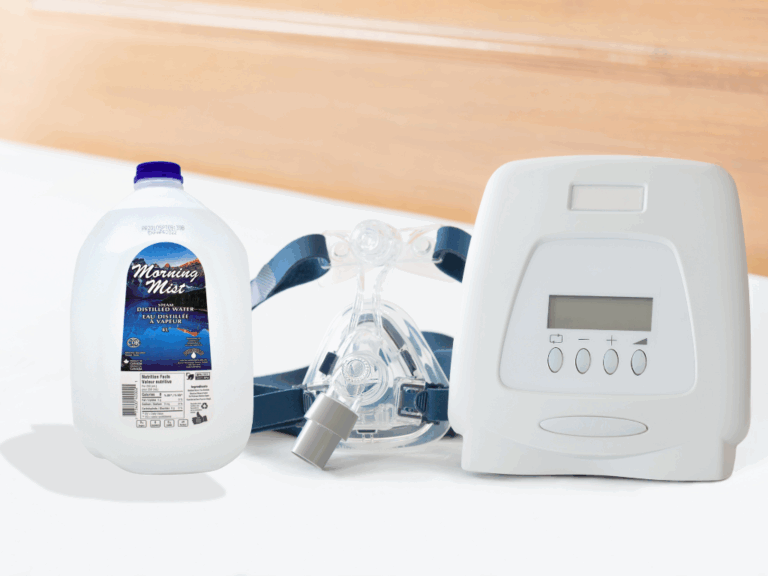
For a Canadian company that has been distilling water for over forty years, the most interesting development is the slow recognition by global municipal planners that pure water is worth the energy it takes to make it — and that the energy itself can come from places we haven’t been looking. The Gulf will keep building megaplants. Singapore will prove out the integrated city-scale model. And the basic chemistry of why distilled water matters — for pharmacies, for hospitals, for CPAP machines, for laboratories — only becomes more important as the rest of the world catches up.
References
- Jones, E., Qadir, M., van Vliet, M.T.H., Smakhtin, V., & Kang, S.-M. (2019). The state of desalination and brine production: A global outlook. Science of the Total Environment, 657, 1343–1356. doi:10.1016/j.scitotenv.2018.12.076
- Eke, J., Yusuf, A., Giwa, A., & Sodiq, A. (2020). The global status of desalination: An assessment of current desalination technologies, plants and capacity. Desalination, 495, 114633. doi:10.1016/j.desal.2020.114633
- Al-Karaghouli, A., & Kazmerski, L.L. (2013). Energy consumption and water production cost of conventional and renewable-energy-powered desalination processes. Renewable and Sustainable Energy Reviews, 24, 343–356. doi:10.1016/j.rser.2012.12.064
- Shahzad, M.W., Burhan, M., Ang, L., & Ng, K.C. (2017). Energy-water-environment nexus underpinning future desalination sustainability. Desalination, 413, 52–64. doi:10.1016/j.desal.2017.03.009
- Moosavian, S.M. (2025). Thermodynamic, economic, and environmental evaluation of municipal waste incinerator to produce power and fresh water. Energy Science & Engineering. doi:10.1002/ese3.70263
- National Environment Agency, Singapore. Tuas Nexus — Singapore’s First Integrated Water and Solid Waste Treatment Facility. Project announcement.